
Indesit Innex Washing Machine Manual: A Comprehensive Guide
This guide offers detailed instructions for Indesit Innex models, covering installation, operation, maintenance, and troubleshooting – ensuring optimal performance and longevity of your appliance.
The Indesit Innex series represents a commitment to reliable and efficient laundry solutions. These washing machines are designed with user-friendliness in mind, offering a range of programs to cater to diverse fabric types and washing needs. This manual provides comprehensive guidance for models like the XWE-91282 and XWA 81252X W, ensuring you maximize their potential.
From unpacking and installation to understanding error codes, this resource will empower you to confidently operate and maintain your Indesit Innex washing machine, extending its lifespan and delivering consistently clean results. Explore detailed instructions and helpful tips within these pages.
Safety Precautions
Prioritize safety when installing and using your Indesit Innex washing machine. Always disconnect the power supply before maintenance or cleaning. Ensure proper earthing to prevent electric shock. Do not use extension cords or adapters. Keep children and pets away during operation.
Never attempt to repair the machine yourself; contact authorized service personnel. Avoid contact with water leaking from the machine; Read all instructions carefully before use, paying close attention to warning symbols. Improper installation or use can lead to hazards – follow guidelines diligently.
Unpacking and Installation
Carefully unpack your Indesit Innex washing machine, removing all packaging materials. Inspect for any shipping damage immediately, noting any issues with the carrier. Position the machine on a firm, level surface, ensuring adequate ventilation around it. Remove transit bolts before operation – these are crucial for stable performance.
Refer to the leveling instructions to adjust the feet, preventing excessive vibration. Ensure sufficient space for hose connections and access for maintenance. Incorrect installation can void the warranty and affect functionality.
Checking for Damage
Upon unpacking, thoroughly inspect the Indesit Innex washing machine for any visible damage incurred during shipping. Examine the exterior for dents, scratches, or broken parts. Carefully check the door seal, detergent dispenser, and drum interior for cracks or defects.
If damage is found, do not operate the machine. Immediately contact the retailer and the delivery company to report the issue and arrange for a replacement or repair. Document any damage with photographs as proof.
Leveling the Washing Machine
Proper leveling is crucial for stable and quiet operation. Use a spirit level to check the machine’s stability on the floor. Adjust the adjustable feet, located at the bottom corners, by rotating them clockwise or counterclockwise until the machine is perfectly level.

Ensure all feet are firmly in contact with the floor. A properly leveled machine minimizes vibration and noise during the wash cycle, preventing potential damage and ensuring optimal performance.
Connecting Water Supply
Ensure a secure water connection to your Indesit Innex washing machine. Attach the inlet hose to both the machine and a suitable water tap, verifying a tight fit to prevent leaks. Use only the supplied hoses, as replacements may not be compatible.
Before connecting, check the tap for sediment and ensure it’s fully open. Proper connection is vital for efficient operation and prevents potential water damage. Always follow local plumbing codes.
Inlet Hose Connection
To connect the inlet hose, screw it firmly onto the washing machine’s inlet valve and the water tap. Hand-tighten initially, then use pliers for a quarter turn to ensure a watertight seal – avoid over-tightening. The blue hose connects to the cold water supply, and the red (if present) to the hot.
Regularly inspect the hoses for cracks or bulges, replacing them if necessary. A secure connection prevents leaks and ensures optimal water flow during wash cycles.
Water Pressure Requirements
Optimal washing machine performance relies on adequate water pressure. Indesit Innex models typically require a water pressure between 0.1 MPa (1 bar) and 1.0 MPa (10 bar). Insufficient pressure can lead to slow filling or incomplete cycles, while excessive pressure may damage internal components.
If your water pressure is low, consider installing a pressure booster. Regularly check the inlet hoses for kinks or obstructions that could restrict water flow, impacting wash quality.

Electrical Connection
Prior to connecting your Indesit Innex washing machine, verify your electrical supply matches the machine’s specifications – typically 220-240V, 50Hz. Always use a grounded outlet to prevent electric shock. Never use extension cords or adapters. Ensure the power cable isn’t pinched or damaged during installation.
Improper electrical connection can void the warranty and pose a safety hazard. If unsure, consult a qualified electrician for assistance with the connection process.
Power Supply Specifications
The Indesit Innex washing machine is designed to operate on a standard household electrical supply of 220-240 Volts at 50 Hertz frequency. Maximum power consumption typically ranges between 1900-2300 Watts, depending on the specific model (like XWE-91282). A dedicated circuit breaker of 10-16 Amps is recommended for optimal and safe operation.
Using an incorrect voltage or frequency can cause irreversible damage to the appliance and void the warranty. Always check your local power supply before connecting.
Earthing Instructions
Proper earthing is crucial for safety, preventing electric shock in case of a fault. The Indesit Innex washing machine features a three-pin plug; the green/yellow wire must be securely connected to a reliable earth ground. Never bypass or disable the earthing connection.
If your electrical outlet lacks an earth connection, consult a qualified electrician to install one before using the appliance. Incorrect earthing voids the warranty and poses a serious safety hazard.
Control Panel Overview
The Indesit Innex control panel is designed for intuitive operation. It typically includes a Program Selector Dial to choose wash cycles, and Display Indicators showing the selected program, temperature, spin speed, and remaining time. Buttons allow adjustments to these settings.
Familiarize yourself with each function before use. The manual provides a detailed explanation of each indicator and button, ensuring you can effectively control your washing machine and achieve optimal results.
Program Selector Dial
The Program Selector Dial is the primary control for choosing the appropriate wash cycle. It features a range of options, including Cotton, Synthetics, Delicates/Wool, Quick Wash, and Eco programs, each tailored for specific fabric types and soil levels.
Rotating the dial aligns the desired program with the indicator light. Refer to the ‘Wash Programs Explained’ section of this manual for detailed descriptions of each cycle and recommended usage, ensuring optimal garment care.
Display Indicators
The Indesit Innex washing machine utilizes various display indicators to communicate the status of the wash cycle. These indicators illuminate to show the selected program, cycle phase (wash, rinse, spin), remaining time, and any active options like temperature or spin speed adjustments.
Error codes are also displayed here, signaling potential issues. Consult the ‘Troubleshooting’ and ‘Understanding Error Codes’ sections of this manual for detailed explanations and solutions to any displayed error messages.
Wash Programs Explained
The Indesit Innex washing machine offers a range of wash programs tailored to different fabric types and soiling levels. These programs include Cotton, Synthetics, Delicates/Wool, Quick Wash, and Eco. Each program adjusts water temperature, drum rotation speed, and cycle duration for optimal cleaning and fabric care.
Refer to the detailed descriptions of each program in the following sections to select the most appropriate setting for your laundry load, ensuring effective and gentle washing.
Cotton Program
The Cotton program is designed for washing robust cotton and linen items, ensuring effective stain removal and thorough cleaning. This program utilizes higher wash temperatures and vigorous drum movements to tackle everyday dirt and grime. It’s ideal for items like t-shirts, bed linen, and towels.
Adjustable settings allow customization of temperature and spin speed to suit the specific cotton fabric and desired dryness level. Always check garment care labels before using this program.
Synthetics Program
The Synthetics program is tailored for washing synthetic fabrics like polyester, nylon, and acrylics. This cycle employs gentler wash actions and lower temperatures compared to the Cotton program, preventing damage and maintaining fabric integrity. It’s perfect for everyday clothing items such as shirts, blouses, and sportswear.
Users can adjust the spin speed to minimize creasing and ensure optimal drying. Always verify garment care labels before selecting this program to avoid shrinking or discoloration.
Delicates/Wool Program
The Delicates/Wool program provides exceptionally gentle care for sensitive fabrics like silk, lace, and wool. This cycle utilizes a very slow drum rotation and cool water temperatures to prevent stretching, shrinking, or felting. It’s ideal for lingerie, hand-wash only items, and woolen garments requiring special attention.
Always use a detergent specifically designed for delicates or wool to maintain fabric softness and prevent damage. Avoid overloading the machine to ensure thorough cleaning and gentle handling.

Quick Wash Program
The Quick Wash program is designed for lightly soiled garments that require a fast refresh. This cycle typically completes within 15-30 minutes, using reduced water and energy consumption. It’s perfect for items worn briefly or needing a quick clean before wearing again.
However, avoid using this program for heavily soiled items, as the shorter duration may not provide a thorough clean. Use a suitable detergent and do not overload the machine for optimal results.
Eco Program
The Eco Program, often indicated by a flower symbol, is designed for energy-efficient washing of normally soiled cottons. This cycle utilizes lower temperatures and reduced water consumption, minimizing environmental impact and lowering your utility bills. It typically has a longer wash duration compared to other programs.
While effective for everyday laundry, it may not be suitable for heavily soiled items or those requiring high-temperature disinfection. Always use the recommended amount of detergent for optimal performance.
Detergent Dispenser
The detergent dispenser features compartments for pre-wash detergent, main wash detergent, and fabric softener. Always use the correct type of detergent – powder, liquid, or gel – as indicated in the program instructions. Ensure the dispenser is properly filled, avoiding overfilling which can cause residue buildup.
Regularly clean the dispenser drawer to prevent blockages and maintain optimal washing performance. Refer to the maintenance section for detailed cleaning instructions. Incorrect detergent usage can affect wash results and potentially damage the machine.
Compartment Usage
The detergent dispenser typically has three compartments, often marked with Roman numerals or symbols. Compartment I is for pre-wash detergent, used for heavily soiled items. Compartment II is for the main wash detergent, utilized for every wash cycle. Compartment, usually indicated by a flower symbol, is for fabric softener – do not exceed the maximum fill line;
Some models may have an additional compartment for bleach. Always check your machine’s specific diagram for accurate compartment identification and usage. Incorrect placement can lead to ineffective cleaning or damage to fabrics.
Detergent Types
Indesit Innex washing machines are compatible with various detergent types, including powder, liquid, and gel. Powder detergents are generally more economical, while liquid detergents dissolve easily and are suitable for lower temperatures. Gel detergents are often preferred for delicate fabrics and pre-treating stains.
Always use detergents specifically formulated for washing machines and follow the manufacturer’s dosage recommendations. Avoid using excessive detergent, as this can leave residue on clothes and in the machine. Consider using a detergent designed for front-load washers if applicable.
Loading the Washing Machine
Proper loading is crucial for effective cleaning and preventing damage to your Indesit Innex. Avoid overloading the drum, as this restricts movement and reduces washing performance. Refer to the machine’s specifications for the maximum load capacity, typically indicated in kilograms.
Distribute items evenly around the drum to maintain balance during the spin cycle. Place larger items, like towels or bedding, loosely to allow for adequate water circulation. Ensure small items are secured within a mesh laundry bag to prevent them from getting lost.
Maximum Load Capacity
The Indesit Innex washing machine has a specific maximum load capacity, typically ranging from 5 to 9 kilograms, depending on the model (like XWE-91282). Exceeding this limit compromises washing effectiveness and can cause damage to the machine’s components, potentially voiding the warranty.
Check the product label or your user manual for the precise capacity of your appliance. Consider the fabric type; lighter items, like synthetics, allow for a larger volume compared to heavier materials like denim or towels. Always adhere to the recommended load size.
Proper Garment Placement
To ensure optimal cleaning and prevent damage, distribute laundry evenly inside the drum. Avoid tightly packing items, allowing sufficient space for movement during the wash cycle. Place larger items, like towels or bedsheets, around the drum’s perimeter.
Smaller garments should be distributed amongst larger ones to maintain balance. Secure loose items, such as socks or delicate lingerie, within a mesh laundry bag to prevent tangling or getting caught. Never overload the machine, as this restricts water flow and cleaning performance.
Starting a Wash Cycle
Before initiating a wash, verify the door is securely closed. Select the appropriate wash program using the program selector dial, considering fabric type and soil level. Adjust settings like temperature and spin speed as needed, referencing the program guide for recommendations.
Ensure the detergent dispenser contains the correct amount of detergent for the load size and water hardness. Press the start/pause button to begin the cycle; the machine will automatically fill with water and commence washing. Monitor the display for cycle progress.
Selecting a Program
The program selector dial offers various wash cycles tailored to different fabrics and needs. Cotton programs are ideal for everyday cotton items, while Synthetics suit delicate synthetics. Delicates/Wool provides gentle care for sensitive fabrics. Quick Wash offers a shorter cycle for lightly soiled items, and Eco maximizes energy efficiency.
Refer to the program guide within this manual for detailed descriptions of each cycle, including recommended temperatures and spin speeds. Consider the load’s color and soil level when choosing a program for optimal results.
Adjusting Settings (Temperature, Spin Speed)
After selecting a program, customize it to your needs. Temperature can be adjusted using the corresponding buttons or dial, ranging from cold wash to high heat – always check garment care labels. Spin speed controls the moisture level; higher speeds mean drier clothes but can cause more wrinkles.
Lower spin speeds are gentler on delicate fabrics. Utilize the display indicators to confirm your selected settings before starting the cycle. Remember to prioritize fabric care and energy efficiency.
Maintenance and Cleaning
Regular maintenance ensures your Indesit Innex washing machine operates efficiently and extends its lifespan. Periodically clean the detergent dispenser to prevent residue buildup, using warm water and a soft cloth. Run an empty hot wash cycle with a washing machine cleaner monthly to eliminate odors and grime within the drum.
Crucially, clean the filter regularly to remove lint and debris – preventing drainage issues. Refer to the ‘Replacing the Filter’ section for detailed instructions. Consistent cleaning prevents malfunctions.
Cleaning the Detergent Dispenser
To clean the detergent dispenser, first remove it from the washing machine – typically by pressing a release button or lever. Rinse thoroughly under warm running water, using a soft brush or cloth to remove any lingering detergent or fabric softener residue. Pay attention to the compartments, ensuring no blockages exist.
Stubborn residue can be tackled with a solution of warm water and white vinegar. Dry the dispenser completely before reinserting it into the machine, preventing mold growth and ensuring proper function.

Cleaning the Drum
Regular drum cleaning prevents odors and residue buildup. Run an empty wash cycle at a high temperature (60°C or hotter) with a washing machine cleaner or a cup of white vinegar. Ensure the drum is empty before starting the cycle. This process helps eliminate bacteria and detergent residue.
For persistent odors, repeat the cleaning cycle. After the cycle, wipe down the drum interior with a clean, damp cloth. Leave the door slightly ajar to allow for ventilation and prevent moisture buildup, maintaining freshness.
Cleaning the Filter
The filter, typically located at the front bottom of the machine, traps lint and debris. Before cleaning, unplug the washing machine and prepare a shallow container and towels for potential water spillage. Carefully open the filter access panel and unscrew the filter cap.
Remove any obstructions, rinsing the filter thoroughly under running water. Inspect the filter housing for any remaining debris. Reinstall the filter securely, ensuring a watertight seal to prevent leaks during operation. Regular cleaning (every few months) maintains optimal drainage.
Troubleshooting Common Issues
If your machine isn’t starting, check the power supply and ensure the door is securely closed. For drainage problems, inspect the drain hose for kinks or blockages and clean the filter. Error codes displayed indicate specific faults; consult the manual for their meanings.
Common issues like excessive vibration can often be resolved by leveling the machine. Persistent problems may require professional assistance. Always disconnect the power before attempting any repairs or inspections to ensure safety.
Machine Not Starting
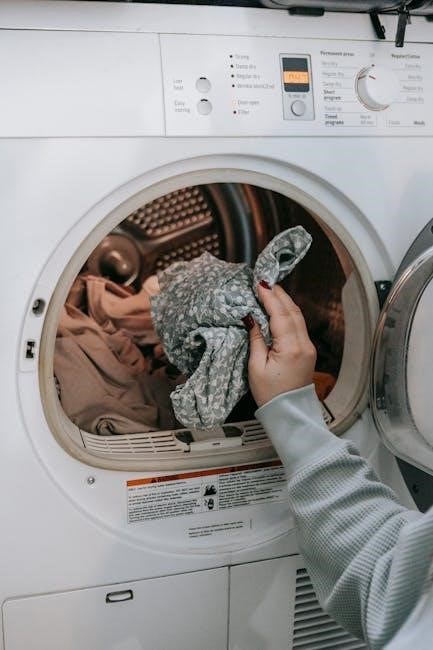
If the washing machine fails to start, first verify the power cord is firmly plugged into a working outlet. Check the circuit breaker or fuse box to ensure power is reaching the appliance. Confirm the door is completely and securely closed, as a safety interlock prevents operation if ajar.
Also, examine the start/pause button and program selector dial for proper engagement. If issues persist, consult the error code display for clues, or contact Indesit support for assistance.
Water Not Draining
If water remains in the drum after a wash cycle, the drain hose may be kinked or blocked. Inspect the hose for obstructions and ensure it’s correctly positioned. A clogged drain filter is a common cause; locate and carefully clean the filter, removing any lint, coins, or debris.
Verify the drain pump isn’t faulty – listen for humming during the drain cycle. If problems continue, consult the error codes or contact Indesit support for professional help.
Error Codes and Their Meanings
Indesit washing machines utilize error codes to signal malfunctions. A flashing light or specific code sequence indicates a problem requiring attention. For example, “F01” often signifies over-sudsing, requiring less detergent. “F06” may indicate a drain issue, prompting filter checks.
Consult the full error code list in your manual or on the Indesit website to accurately diagnose the issue. Attempting simple fixes, like restarting the machine, may resolve minor errors.
Replacing the Filter
Regular filter replacement is crucial for maintaining optimal washing machine performance. Locate the filter access panel, typically at the machine’s base front. Prepare a shallow container and towels to catch residual water. Carefully unscrew and remove the filter, cleaning debris like lint, coins, and hair.
Inspect the filter housing for obstructions. Reinstall the filter securely, ensuring a watertight seal. Consult your manual for specific filter replacement intervals and model-specific instructions.
Understanding Error Codes
Indesit Innex washing machines utilize error codes to diagnose issues. These codes, displayed on the control panel, indicate specific problems – from water supply issues to drainage malfunctions. Refer to your user manual for a comprehensive list of codes and their corresponding solutions.
Common codes include F01 (water intake error), F03 (drainage issue), and F06 (door not closed properly). Attempting simple fixes, like checking water hoses or the drainpipe, may resolve the issue before contacting support.
Technical Specifications (XWE-91282 as example)
The Indesit XWE-91282 boasts a 9kg drum capacity, ideal for family-sized loads. Its dimensions are approximately 85cm (H) x 60cm (W) x 59.5cm (D). The machine operates on 220-240V/50Hz power, requiring a standard UK three-pin plug. Maximum spin speed reaches 1200 RPM, ensuring efficient water extraction.
Energy efficiency is rated A+++, minimizing consumption. Water consumption per cycle is around 52 liters. The appliance features multiple wash programs, catering to diverse fabric types and soiling levels.
Spare Parts Information
Genuine Indesit spare parts are crucial for maintaining your Innex washing machine’s performance and warranty validity. Commonly replaced parts include the inlet hose, drain pump filter, drive belt, and heating element. Parts can be sourced through the official Indesit website (docs.indesit.eu) or authorized service centers.
When ordering, always provide the model number (e.g., XWE-91282) for accurate compatibility. Third-party parts may compromise functionality and void the warranty. For complex repairs, professional assistance is recommended to ensure safe and correct installation.
Contacting Indesit Support
For assistance with your Indesit Innex washing machine, several support channels are available. Visit the official Indesit website (docs.indesit.eu) for FAQs, troubleshooting guides, and downloadable manuals. Direct support can be accessed through their online contact form or by phone – details are typically found on the regional Indesit website.
When contacting support, have your model number (like XWE-91282) and purchase date ready. Authorized service centers offer in-person repairs and expert advice. Promptly address any issues to prevent further damage.
Warranty Information
Your Indesit Innex washing machine is covered by a manufacturer’s warranty, protecting against defects in materials and workmanship. Warranty duration varies by region and model; consult your purchase documentation for specifics. Typically, the warranty covers parts and labor for a defined period.
To claim warranty service, retain your proof of purchase and contact Indesit support. The warranty does not cover damage from misuse, improper installation, or unauthorized repairs. Registering your appliance may simplify the claims process.