

Fire sprinkler systems utilize diverse types – pendent, upright, sidewall, and concealed – each designed for specific applications and offering unique installation considerations.
Traditional fire sprinklers fall into four main categories, ensuring effective fire control through varied designs and spray patterns for optimal safety.
Understanding these types is crucial for selecting the appropriate system, as specialized sprinkler heads cater to challenging projects and diverse occupancy needs.
What are Fire Sprinkler Heads?
Fire sprinkler heads are crucial components of active fire protection systems, automatically discharging water when a predetermined temperature is reached. These devices, available in various types – pendent, upright, sidewall, and concealed – are strategically positioned throughout a building.
Each sprinkler head features a heat-sensitive element, either a glass bulb or a fusible link, designed to activate independently, targeting the fire’s source. This localized response minimizes water damage compared to widespread flooding from manual systems.
Different designs cater to specific architectural needs and hazard levels, ensuring optimal fire suppression and life safety. Understanding these types is essential for effective system design and maintenance.
The Importance of Fire Sprinkler Systems
Fire sprinkler systems are paramount for life safety and property protection, offering rapid fire suppression before emergency services arrive. These systems, utilizing diverse types of sprinkler heads – pendent, upright, sidewall, and concealed – significantly reduce fire-related injuries and fatalities.
Automatic activation minimizes fire spread, containing damage and allowing occupants crucial evacuation time. Properly designed systems, incorporating appropriate sprinkler head selection, can control or even extinguish a fire in its early stages.
Beyond safety, fire sprinklers often lead to reduced insurance premiums and demonstrate a commitment to building safety, enhancing property value and peace of mind.

Types of Fire Sprinkler Heads
Fire sprinkler heads encompass pendent, upright, sidewall, and concealed designs, each strategically engineered for specific architectural layouts and fire protection needs.
Pendent Sprinkler Heads
Pendent sprinkler heads are among the most commonly installed types, characterized by their downward-facing orientation. This design allows water to distribute in a hemispherical pattern below the sprinkler, making them ideal for spaces with unobstructed ceilings.
These sprinklers are typically used in commercial and residential settings, offering reliable fire suppression. Their installation is straightforward, and they are effective in controlling fire spread in various occupancy types. The downward spray pattern efficiently covers a wide area, quickly addressing fire hazards.
Proper spacing and placement are crucial for optimal performance, ensuring complete coverage and minimizing the risk of fire escalation. They are a foundational component of many fire protection systems.
Operation and Applications of Pendent Sprinklers
Pendent sprinklers operate by releasing water when the heat from a fire activates their heat-sensitive element – either a glass bulb or a fusible link. Once activated, water discharges downwards, creating a spray pattern designed to suppress the fire.
Their applications are widespread, commonly found in offices, retail spaces, apartments, and warehouses with standard ceiling heights. They are particularly effective in areas where a broad coverage area is needed.
These sprinklers are suitable for light hazard occupancies, providing reliable fire protection and minimizing damage. Careful consideration of ceiling obstructions is vital for effective operation.
Upright Sprinkler Heads
Upright sprinkler heads are designed for installation on pipes that run horizontally, with the deflector positioned upwards. Activation occurs similarly to pendent sprinklers – through a heat-sensitive glass bulb or fusible link responding to fire.
Water is discharged upwards and then distributed downwards via the deflector, offering a unique spray pattern. These are often used in areas with exposed pipes or where obstructions prevent the use of pendent sprinklers.
Common applications include mechanical rooms, parking garages, and areas with high ceilings, providing effective fire suppression in challenging environments.
Installation Considerations for Upright Sprinklers
Upright sprinkler installation demands careful attention to pipe support, ensuring stability and preventing stress on the sprinkler head. Proper alignment is crucial for symmetrical water distribution, maximizing fire suppression effectiveness.
Adequate clearance from obstructions is vital; insufficient space can distort the spray pattern, reducing coverage. Consideration must be given to potential water accumulation within the piping, especially in colder climates, to avoid freezing.
Regular inspection and maintenance are essential, verifying the sprinkler is free from corrosion and debris, guaranteeing reliable operation during a fire emergency.
Sidewall Sprinkler Heads
Sidewall sprinkler heads are uniquely designed for installations where traditional pendent or upright configurations are impractical, offering a versatile solution for challenging spaces.
These sprinklers project water horizontally, making them ideal for corridors, alcoves, and rooms with obstructed ceilings. Their placement allows for efficient fire suppression with minimal visual impact.
Different deflection patterns – up, down, or a combination – cater to specific room geometries and fire hazard levels, ensuring optimal coverage. Careful selection and proper installation are key to maximizing their effectiveness.
Advantages of Sidewall Sprinkler Placement
Sidewall sprinkler placement offers significant advantages in architectural settings where concealing sprinkler heads is desired, or ceiling obstructions prevent traditional installations.
Their horizontal spray pattern minimizes water damage to sensitive equipment and materials, a crucial benefit in areas like server rooms or historical buildings. Installation flexibility is another key advantage, adapting to various ceiling heights and configurations.
Furthermore, sidewall sprinklers can reduce piping costs by utilizing existing wall cavities, streamlining the installation process and enhancing overall system efficiency.
Concealed Sprinkler Heads
Concealed sprinkler heads are designed for applications prioritizing aesthetics, offering a discreet fire protection solution. These sprinklers are hidden behind decorative cover plates that blend seamlessly with the surrounding architecture, maintaining the visual appeal of a space.
Upon fire detection, the cover plate falls away, allowing the sprinkler to activate and deploy its extinguishing agent. This design is particularly popular in commercial buildings, hotels, and residential properties where maintaining a clean, uncluttered look is essential.
They provide robust fire protection without compromising interior design.
Aesthetic Benefits of Concealed Sprinklers
Concealed sprinklers offer significant aesthetic advantages, seamlessly integrating into interior designs without compromising fire safety. Their primary benefit lies in being hidden behind decorative cover plates, matching ceiling textures and architectural styles. This discreet approach avoids the visual disruption often associated with exposed sprinkler heads.
They are ideal for spaces where maintaining a specific aesthetic is crucial, such as high-end retail environments, luxury hotels, and architecturally significant buildings. The ability to blend sprinklers into the background preserves the intended design vision.
This results in a more pleasing and unobtrusive environment.

Sprinkler Head Activation Methods
Sprinkler heads activate via heat-sensitive components: either glass bulbs or fusible links, responding to elevated temperatures and initiating fire suppression.
These mechanisms trigger the release of water, effectively controlling or extinguishing fires based on specific temperature ratings and design.
Glass Bulb Sprinkler Heads
Glass bulb sprinkler heads employ a small glass bulb filled with a heat-responsive liquid, meticulously engineered to shatter at a predetermined temperature. This precise activation method is a cornerstone of fire protection systems, offering reliable performance.
Temperature Ratings and Color Coding are critical for proper selection; bulbs are color-coded to indicate their activation temperature, ranging from 135°F to 212°F (or higher). This clear visual cue ensures the correct sprinkler head is installed for the specific hazard and environment.
When exposed to sufficient heat, the liquid expands, causing the glass bulb to fracture, releasing the valve cap and allowing water to flow. This swift response is vital for controlling fires in their early stages, minimizing damage and safeguarding lives.
Temperature Ratings and Color Coding
Glass bulb sprinkler heads utilize a standardized color coding system to clearly indicate their activation temperature. This is paramount for selecting the appropriate sprinkler for a given environment and hazard level. Common temperature ratings range from 135°F to 212°F, and beyond for specialized applications.
Bulbs are typically colored as follows: orange (135°F-165°F), red (175°F-200°F), yellow (200°F-212°F), and green (higher temperatures). This visual system simplifies installation and ensures compliance with fire safety regulations.
Correct temperature rating selection is crucial; too low, and nuisance activations may occur, while too high, and the sprinkler may not activate quickly enough to suppress a fire effectively.
Fusible Link Sprinkler Heads
Fusible link sprinkler heads employ a two-part metal alloy that melts at a predetermined temperature, releasing the valve cap and allowing water flow. This mechanism provides a reliable and cost-effective activation method. These links are designed to respond to heat, offering a direct thermal response without relying on glass bulb breakage.
When exposed to sufficient heat from a fire, the fusible link separates, opening the sprinkler. The alloy composition dictates the activation temperature, ensuring appropriate response for various hazard levels. They are commonly found in commercial and industrial settings.
Regular inspection of fusible links is vital to confirm their integrity and ensure proper functionality in a fire emergency.
How Fusible Links Respond to Heat
Fusible links react to heat through a precise metallurgical process. Composed of two metal alloys with differing melting points, the link remains intact under normal ambient temperatures. As heat intensifies from a fire, the alloy with the lower melting point begins to soften and eventually liquefy.
This liquefaction weakens the link’s structural integrity, causing it to separate under the tension of the valve cap. This separation instantly releases the cap, opening the sprinkler and initiating water discharge. The speed of response is directly correlated to the intensity of the heat exposure.
This direct thermal activation ensures reliable operation, making fusible link sprinklers a dependable fire protection component.

Sprinkler Head Coverage Patterns
Sprinkler heads offer varied coverage: standard spray for common areas, extended coverage for larger spaces, and specialized designs like ESFR for rapid suppression.
Different types distribute water in distinct patterns, tailored to specific hazard levels and occupancy characteristics for optimal fire protection.
Standard Spray Sprinkler Heads
Standard spray sprinklers are a widely utilized choice for general hazard occupancy applications, offering a broad portfolio for typical coverage areas. These sprinklers feature a deflector designed to distribute water in a specific pattern, effectively controlling fire spread.
They are commonly found in offices, retail spaces, and residential buildings, providing reliable fire suppression. Series TY-B and Illusion standard coverage sprinklers represent popular options within this category. Their design focuses on controlling the fire, rather than immediate suppression, making them suitable for many common scenarios.

Proper selection and installation are vital to ensure optimal performance and adherence to fire safety standards.
Applications in Common Occupancies
Standard spray sprinkler heads find extensive use in diverse, common occupancies, including office buildings, retail stores, and multi-family residential complexes. Their versatility makes them a practical choice for broad hazard protection.
These sprinklers are particularly effective in areas with relatively low fire loading and predictable fire growth patterns. Schools, churches, and light manufacturing facilities also frequently employ standard spray systems.
The design ensures adequate water distribution for controlling fire spread, contributing to life safety and property protection. Careful consideration of room layout and potential fire sources is crucial for optimal placement.
Extended Coverage Sprinkler Heads
Extended coverage sprinkler heads are engineered for safeguarding larger, unobstructed areas, reducing the overall number of sprinklers needed in a system. This makes them ideal for warehouses, large retail spaces, and manufacturing facilities with high ceilings.
These sprinklers deliver a wider spray pattern and increased flow rate, effectively covering expansive zones. They are particularly beneficial where obstructions might hinder the performance of standard spray sprinklers.
Proper design and spacing are critical to ensure complete coverage, and adherence to NFPA standards is essential for reliable fire suppression in these larger environments.
Larger Area Protection Capabilities
Extended coverage sprinkler heads excel in protecting substantial areas due to their enhanced spray distribution and flow characteristics. They minimize the density of sprinklers required, offering cost savings in installation and maintenance, particularly in expansive spaces.
These sprinklers are designed to deliver a greater volume of water over a wider radius, effectively suppressing fires in warehouses, retail stores, and industrial settings. Their capability reduces the risk of fire spread.
Careful hydraulic calculations and adherence to fire codes are vital to guarantee optimal performance and complete coverage within these larger protected zones.
Specific Application Sprinklers
Specific application sprinklers, like Early Suppression, Fast Response (ESFR) sprinklers, are engineered for high-challenge fire scenarios. These are commonly found in storage facilities containing flammable materials, demanding rapid fire control and suppression.
ESFR sprinklers deliver a large water discharge, directly attacking the fire plume and preventing its growth. They are designed to control fires before they escalate, minimizing damage and protecting valuable assets.
Selecting the correct sprinkler type for a specific hazard is crucial, ensuring compliance with fire safety regulations and maximizing protection effectiveness.
ESFR Sprinklers (Early Suppression, Fast Response)
ESFR sprinklers represent a critical advancement in fire protection, designed for high-hazard occupancies like warehouses storing combustible materials. Their primary function is early suppression, rapidly controlling fires before they fully develop, minimizing damage and facilitating safe evacuation.
These sprinklers deliver a substantial water discharge volume directly onto the fire plume, effectively cooling the fire and preventing its spread. This fast response is crucial in environments where fires can escalate quickly.
Proper installation and maintenance of ESFR sprinklers are paramount to ensure optimal performance and adherence to fire safety standards.
Sprinkler Head Materials and Finishes
Sprinkler heads are commonly constructed from metal or plastic, offering varying degrees of corrosion resistance, durability, and cost-effectiveness for diverse applications.
Metal options prioritize longevity, while plastic provides lightweight alternatives suitable for specific installation requirements and budgetary constraints.
Metal Sprinkler Heads
Metal sprinkler heads, traditionally crafted from brass or steel, are renowned for their exceptional durability and resistance to physical damage, making them ideal for demanding environments.
These materials exhibit superior corrosion resistance, particularly crucial in humid or chemically exposed settings, ensuring long-term reliability and minimizing maintenance needs.
The robust construction of metal sprinklers allows them to withstand high temperatures and pressures, maintaining structural integrity during fire events and facilitating consistent performance.
While potentially more expensive upfront, the extended lifespan and reduced replacement frequency of metal sprinkler heads often result in lower lifecycle costs;
Various finishes, like chrome plating, further enhance corrosion protection and aesthetic appeal.
Corrosion Resistance and Durability
Metal sprinkler heads demonstrate exceptional corrosion resistance, particularly when constructed from brass or steel alloys specifically formulated for harsh environments. This inherent property is vital for maintaining long-term functionality.
Durability is a key characteristic, allowing these heads to withstand physical impacts and maintain structural integrity during fire events, ensuring reliable activation when needed.
Protective finishes, such as chrome plating, further enhance resistance to corrosion, extending the service life and reducing the need for frequent replacements.
This robustness makes metal heads suitable for industrial settings, coastal areas, and other corrosive environments where consistent performance is paramount.
Proper material selection and finishes contribute to a dependable fire protection system.
Plastic Sprinkler Heads
Plastic sprinkler heads offer a lightweight and cost-effective alternative to traditional metal options, making them increasingly popular in certain applications.
These heads are typically constructed from materials like CPVC (Chlorinated Polyvinyl Chloride), providing good resistance to corrosion and ensuring reliable performance.
Their reduced weight simplifies installation, particularly in buildings with weight restrictions or complex ceiling structures, lowering labor costs and project timelines.
While generally suitable for residential and light commercial settings, plastic heads may have limitations in extreme temperature or high-pressure environments.
They represent a viable solution where affordability and ease of installation are key considerations.
Lightweight and Cost-Effective Options
Plastic sprinkler heads stand out as remarkably lightweight, significantly easing installation processes, especially in structures with weight limitations or intricate ceiling designs.
This reduced weight translates directly into lower labor costs and faster project completion times, offering substantial economic benefits to builders and property owners.
Furthermore, these heads are generally more affordable than their metal counterparts, making them an attractive choice for budget-conscious projects.
CPVC construction provides a balance between cost savings and acceptable corrosion resistance for many common applications.
They present a practical solution when prioritizing affordability and simplified installation.

Sprinkler Head Standards and Listings
NFPA 13 dictates compliant installation, while UL Listings verify performance through rigorous testing, ensuring fire sprinkler heads meet safety benchmarks.
Adherence to these standards guarantees reliable operation and life safety within buildings, offering peace of mind to occupants.
NFPA 13 Standards
NFPA 13 provides comprehensive guidelines for the installation of fire sprinkler systems, encompassing crucial aspects like sprinkler spacing, water supply requirements, and system design.
These standards dictate appropriate sprinkler head selection based on occupancy hazard classifications, ensuring adequate protection for various building types. Compliance with NFPA 13 is paramount for ensuring system effectiveness and life safety.
The standard details specific installation requirements for different types of sprinkler heads – pendent, upright, sidewall, and concealed – addressing factors like mounting height and obstruction clearance.
Regular inspections and maintenance, as outlined by NFPA 13, are essential for maintaining system reliability and adhering to code regulations.
Compliance and Installation Requirements
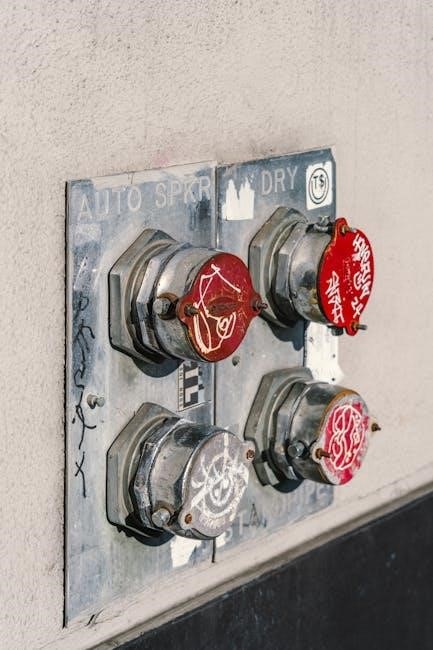
NFPA 13 dictates stringent compliance measures for fire sprinkler installations, demanding adherence to approved design plans and manufacturer specifications. Proper installation is critical for reliable operation during a fire event.
Requirements include correct sprinkler head spacing, ensuring adequate coverage based on hazard levels and room geometry. Qualified personnel must perform installations, verifying proper pipe sizing and water flow rates.
Different types of sprinkler heads – pendent, upright, sidewall, and concealed – necessitate specific mounting techniques and clearances to avoid obstructions. Regular inspections are mandatory to confirm ongoing compliance.
Documentation, including hydraulic calculations and as-built drawings, is essential for demonstrating compliance to authorities having jurisdiction and ensuring long-term system integrity.
UL Listings
UL Listings signify that fire sprinkler heads have undergone rigorous testing and evaluation by Underwriters Laboratories, verifying their performance and safety standards. This independent assessment assures building owners and authorities of product reliability.
UL tests evaluate factors like response time, discharge pattern, and temperature sensitivity, ensuring sprinkler heads activate as intended under fire conditions. Different types – pendent, upright, sidewall, and concealed – are tested individually.
A UL Listing confirms the sprinkler head meets specific fire protection criteria, including resistance to corrosion and mechanical stress. It’s a crucial component of compliance with building codes and insurance requirements.
Look for the UL Mark on sprinkler heads to guarantee they’ve been independently verified for quality and performance, providing peace of mind regarding fire safety.
Testing and Performance Verification
Testing and performance verification of fire sprinkler heads are critical to ensuring reliable operation during a fire. UL conducts comprehensive evaluations, simulating real-world fire scenarios to assess activation and discharge characteristics.
These tests verify that each type – pendent, upright, sidewall, and concealed – meets stringent standards for response time, spray pattern, and water distribution. Sprinkler heads are subjected to varying heat levels and pressures.
Performance verification includes assessing the sprinkler head’s ability to suppress or control a fire effectively. This process confirms the head’s compatibility with different piping systems and water supplies.
Rigorous testing provides confidence that fire sprinkler heads will function as designed, protecting lives and property. Independent verification is essential for compliance and safety.